Description
As the 1099 filing season approaches, now is the ideal time to clean up vendor records, verify TIN information, and ensure your organization is prepared for the rush of January reporting. Getting ahead of your 1099 obligations can dramatically reduce stress and prevent costly errors — especially with the significant updates taking effect for the 2026 filing year.
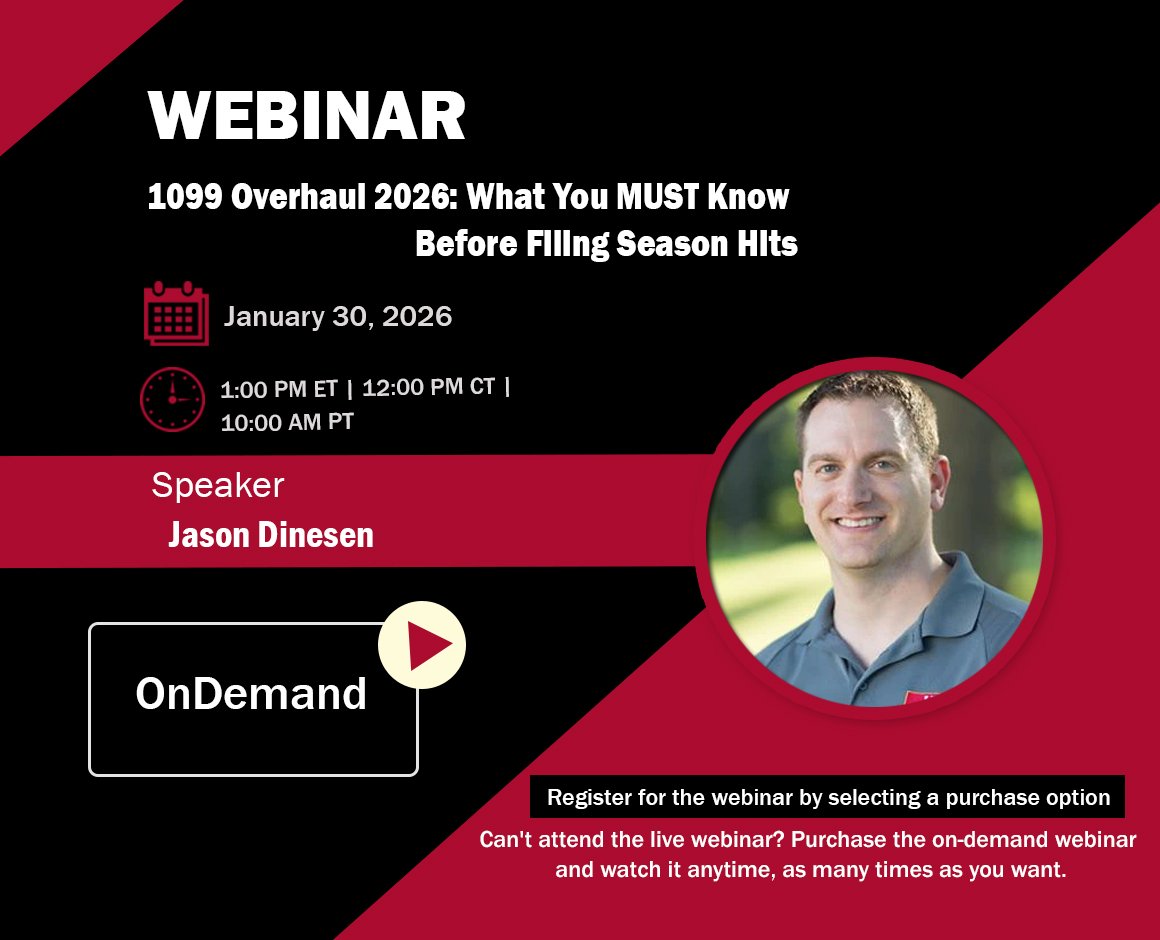
In this timely and practical webinar, industry expert Jason Dinesen breaks down the newest requirements, key changes, and compliance rules affecting the 1099 landscape. The OBBB has introduced new thresholds for Forms 1099-NEC and 1099-MISC starting in 2026, reversed prior 1099-K rules for third-party settlement organizations, and the IRS has rolled out Form 1099-DA, establishing broker reporting for digital assets and cryptocurrency transactions. Jason will walk you through these updates and explain what they mean for your business.
You’ll also dive into TIN Matching changes, e-filing rules, deadlines, and practical “what goes where” guidance across the most commonly used 1099 forms. Complex reporting situations — such as attorney fees, deceased employee payments, and withholding requirements — will be clarified with Jason’s straightforward explanations and real-world examples.
Why Should You Attend?
With over 20 types of 1099 forms, understanding which payments belong on which form can feel overwhelming. This session provides the clarity you need. Jason Dinesen demystifies the reporting rules, explains the newest IRS updates, and identifies high-risk areas that frequently trip up businesses.
You’ll learn:
- What’s new under the One Big Beautiful Bill (OBBB) and how its changes affect 1099 reporting
- The latest updates for Forms 1099-NEC, 1099-MISC, 1099-K, 1099-DA, and more
- E-filing requirements, due date reminders, TIN Matching updates, and withholding rules
- How to properly report attorney’s fees When payments to the estate of a deceased employee should be reported on a 1099 vs. a W-2
Penalties, risk points, and best practices to stay compliant and avoid costly mistakes
Additional topics include:
- Reviewing and improving your organization’s 1099 reporting workflow
- Understanding the new rules for 2025 and 2026, including 1099-DA digital asset reporting
- Identifying risk points in your AP and vendor setup processes
- Communicating with AP and finance teams to ensure proper payment classification
Jason will cover the following 1099 forms in depth — including reportable payment types, who must issue them, who receives them, thresholds, and compliance nuances: 1099-A 1099-B 1099-C 1099-K 1099-MISC 1099-NEC 1099-R 1099-DIV 1099-OID 1099-INT
Who Should Attend
HR Managers
Payroll Managers
Accounts Payable Managers & Staff
Finance Executives
Tax Professionals
Accounting & Finance Department Staff
Third-Party Payment Settlement & Processing Agencies